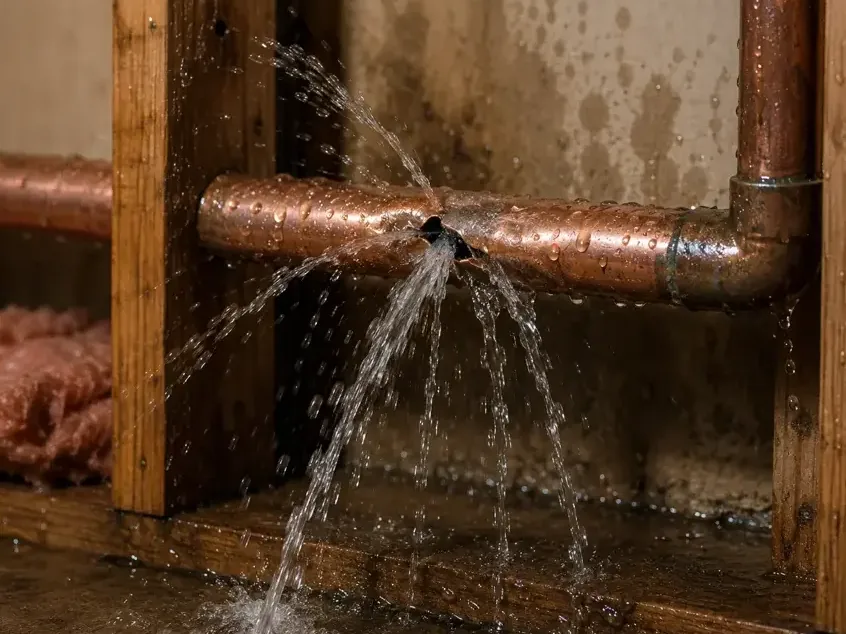
The City of Russellville, Kentucky, advises customers to check for visible or audible leaks and determine whether the problem is on the property or inside the building. It also states that city employees cannot check for leaks past the meter. When a private supply pipe releases water indoors, the owner needs an organized description of the leak, a repair assessment and a separate plan for the rooms and materials that became wet.
Key takeaways
- Use the published city water contact for city water service problems.
- Arrange a private assessment for a leak beyond the meter.
- Describe visible water, audible symptoms and the affected room without opening unsafe areas.
- Track water through adjoining finishes after the source is controlled.
- Retain pipe repair details together with the building drying record.
Describe the symptom before assigning the repair
A homeowner may hear water behind a wall before a wet patch becomes visible, or discover a puddle without seeing the damaged connection. The service request should begin with those observations, including where they occurred and whether the water continues to appear, so the next visit addresses the actual symptom.
The local water department's published advice asks customers to consider whether the leak is outdoors on the property or inside the building. That distinction helps organize the initial conversation, while the person inspecting the private plumbing determines the location and repair needed at the affected property.
The burst pipe water cleanup service addresses the material damage associated with the release. A useful description includes the room involved and any wet finishes beyond the suspected pipe location, giving the cleanup provider enough context to plan assessment while the source is being handled.
- Report the location of visible or audible water.
- Explain whether the symptom continues when fixtures are unused.
- Keep wet electrical areas and unstable finishes out of use.
- Identify any adjoining room where water has appeared.
The meter boundary changes who inspects the leak
Russellville publishes a clear limit on city employee leak checks past the meter. An owner dealing with a private building leak should therefore arrange the appropriate private plumbing assessment and provide the observations already collected, rather than waiting for an interior inspection through the city's water service contact.
The repair visit may require access to an enclosed pipe or a connection behind a fixture. Before a finish is opened, the owner should understand where access is proposed and what the plumber expects to inspect, keeping the opening connected to an actual diagnostic purpose.
Any source repair that affects the cleanup area should be communicated to the drying provider. An exposed wall can offer useful inspection access, but the repair status, the material left open and the work still outstanding all need to be understood before the interior drying plan is finalized.
Keep source access and water damage access connected
The opening needed to repair a pipe may reveal only part of the wetted assembly. Water can extend beyond that location into lower finishes or an adjoining floor edge, so the cleanup assessment should consider the observed route rather than treating the plumbing access opening as the full boundary of the loss.
Photographs should identify the source opening and any additional area proposed for inspection. Giving those areas separate labels helps the owner understand why another access point is needed, especially when the plumber has already completed work and a different part of the wall still requires attention.
The scope should also account for what happens after temporary access has served its purpose. The homeowner needs to know which materials will remain open for drying, which damaged finishes require removal and which areas will later need reconstruction by the appropriate trade.
- Mark the pipe repair opening on the room record.
- Describe wet material beyond that opening separately.
- Photograph the assembly before additional removal.
- List the finish repairs created by necessary access.
Remove liquid without losing the room boundary
Standing water often collects at a convenient low point in the room, while dampness remains along the route it traveled. The water extraction process should be paired with perimeter inspection so the disappearance of the largest puddle does not obscure the rest of the affected floor.
A threshold, built in cabinet or storage area can complicate that inspection. Movable contents should be documented and relocated appropriately when they block access, while fixed elements receive a specific assessment that explains whether an edge or panel needs to be opened to evaluate concealed material.
The owner should receive an updated description if the cleanup boundary expands. An additional room or floor section belongs in the record with the observation that prompted its inclusion, allowing the final scope to be understood as a response to conditions found during the job.
Track the material after the pipe stops leaking
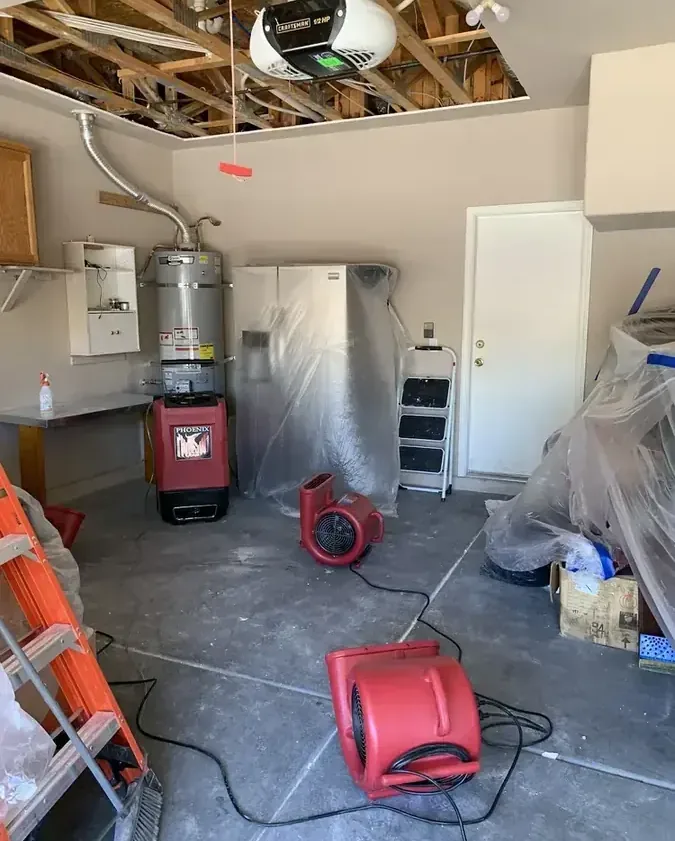
Repairing the supply source ends a particular release when the repair has been checked, but the retained wall and floor materials still need their own assessment. The drying provider should identify those materials and establish locations that can be measured again as treatment progresses.
The structural drying service follows that material response. Its explanation should connect the equipment arrangement with the wet areas being treated, including any cavity or cabinet edge where access is limited and the effect of drying cannot be judged by looking across the room.
Changes during the job should be described in terms the homeowner can follow. A different equipment position, an additional opening or continued treatment of a particular section should have a stated reason tied to the recorded condition, making the progress report useful beyond a simple list of machines present.
- Retain the plumber's description of the corrected fault.
- Identify material measurement points by room and position.
- Ask which area still needs treatment before equipment leaves.
- Keep readings taken before closure with the repair photographs.
Resolve building work questions before closing access
The city states that a building permit is required to alter a structure, and its published information directs plumbing permits through the plumber and the State Plumbing Inspector. An owner planning repair work should present the actual scope to the appropriate contact so the work can be assessed before finishes are replaced.
This conversation is easier when the cleanup file shows the openings and the materials involved. Photographs of an exposed wall or removed finish give the next contractor something concrete to assess, and the pipe repair description explains what prompted the access in the first place.
The owner should keep the administrative questions connected to the construction scope being proposed. A finish replacement, a plumbing repair and an alteration can involve different work descriptions, so each contractor should explain the task being undertaken and how the applicable approval process fits into that task.
Store a record that separates symptoms from completed work
The original report and the completed repair answer different questions. The first describes what the homeowner saw or heard; the second describes what was found and corrected, allowing the record to preserve the distinction even if the initial suspected location changed during the plumbing inspection.
The drying file adds the building response: the rooms assessed, materials removed, retained surfaces treated and the final condition documented. Together, those records explain how a private pipe problem led to interior work, including any section that needed attention beyond the opening used for the repair.
At the final walkthrough, the owner can confirm remaining finish work and the destination of any displaced belongings. A short list of outstanding tasks makes it easier to coordinate the next visit without losing the details of the plumbing correction or the material drying already completed.
Questions
Will city employees check a leak inside the building?
The city's published water information says employees cannot check for leaks past the meter. A private interior leak therefore needs assessment through the appropriate plumbing provider.
What details help when the damaged pipe is hidden?
The location of a sound, the first visible wet area and the pattern of continued water appearance can help the investigation begin. Occupants should avoid opening walls or entering wet electrical areas to improve that description.
Why might cleanup need more access than the plumber used?
The repair opening reaches the plumbing fault. Material inspection may reveal a wider wet area that needs its own access for assessment, removal or drying.
What should be confirmed before the wall is repaired?
The owner should have the source repair status, the drying assessment for retained materials and a clear description of the finish work proposed. Relevant building and plumbing questions can then be directed to the appropriate local contact.
Is a quiet pipe enough to end the drying work?
The absence of the original symptom concerns the source. The drying decision depends on the condition measured in the affected building materials and any concealed section still awaiting assessment.