Structural Drying in Springfield, TN
Clear floors can still conceal wet framing, wall bases and underlayment. The Springfield drying team measures the affected assemblies, controls humidity and adjusts equipment until the material readings support completion.
(888) 849-5796Discuss readings for wet structural materials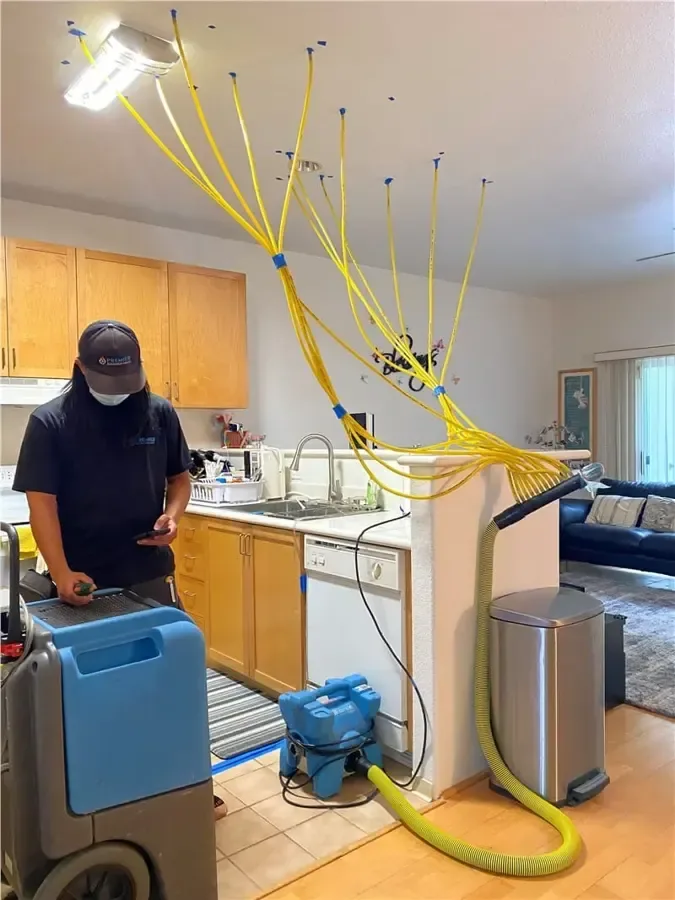
Structural drying concerns water held in the building, not just humidity in the room. The technician identifies affected materials, establishes comparison readings and checks whether air can reach the wet surfaces. Extraction, contamination removal and source control prepare the assembly for a dry-out that can be measured.
Structural drying in Springfield follows the material assembly
Wood, drywall, concrete and layered floor products release moisture differently. A single room can contain several drying conditions at once. The plan tracks those materials separately and checks concealed boundaries before equipment is removed from the project.
A brick ranch in Stonegate, a newer home in Autumnwood and townhomes near Legacy Golf Course provide examples of the area's building variety. The drying crew verifies the actual construction in each affected room. The crew checks for insulation blocking airflow, floor coverings trapping moisture and cabinet bases that need an access opening.
- The initial moisture map identifies the wet boundary and comparison areas before equipment changes the indoor conditions.
- Air movers support evaporation at suitable exposed surfaces; dehumidifiers remove the moisture released into the room air.
- Daily measurements track material progress as well as humidity, rather than relying on a single room-air reading.
- Slow areas prompt a check for concealed layers, insufficient access or a source that continues feeding the assembly.
Balancing evaporation with moisture removal
Air movement without enough dehumidification can redistribute moisture through the room. Dehumidification without access to wet layers can leave the concealed assembly slow to respond. The technician balances both tasks and adjusts placement according to the class of loss, material volume and readings collected during the work.
Dense or tightly enclosed materials may need specialized access or equipment. The IICRC S500 drying standard provides the trade framework, while the individual assembly sets the practical goal. EPA flooded-home cleanup information explains the importance of addressing wet materials promptly. Recorded material readings show how the building responds to the equipment arrangement.
Using a drying record that explains decisions
The log records material locations, comparison readings, indoor conditions and equipment adjustments. If a wall dries while a floor stays wet, the record should show that distinction. A return to the initial test points helps the technician compare progress consistently and explain why a material needed additional access or more drying time.
Properties near Memorial Boulevard need the same measurement discipline as any other local building. The team checks the actual source history instead of assuming every damp surface is part of the current loss. EPA WaterSense information can support leak awareness; ongoing source investigation remains necessary when readings rise rather than decline.
What does structural drying cost in Springfield, TN?
Structural drying typically ranges from $1,000 to $5,000 for a contained project, increasing with material volume, dense assemblies and extended equipment needs. Extraction and reconstruction may be separate parts of the total.
Limited open materials
$1,000 to $2,000
- Reference readings
- Basic equipment layout
- Daily checks
Connected rooms and cavities
$2,000 to $5,000
- Multiple material types
- Access adjustments
- Humidity control
Dense or extensive assemblies
$5,000 to $12,000
- Specialized drying needs
- Longer monitoring
- Detailed endpoint records
These are typical ranges, not a quote. Water category, affected area, material class and the delay before drying change the scope. Compare the Springfield water damage cost calculator.
How structural drying progresses
Establish reference points
The drying technician maps affected materials and appropriate dry comparisons, recording initial moisture and air conditions before equipment begins changing the room’s evaporation and humidity balance.
Match equipment to the load
The crew positions air movers and dehumidifiers for the material volume and available access, accounting for electrical capacity and any contamination controls that remain necessary.
Measure and adjust
The technician revisits marked locations, compares trends and checks slow areas for trapped layers or renewed leakage, changing access or equipment when the measurements justify it.
Document the endpoint
The final log identifies materials that reached their drying goals, records remaining repair or installation requirements and supports a clear handoff before finishes conceal the assembly.
Measured care for structural drying
Rapid local response
The response team treats an active loss as urgent, with 24/7 dispatch and an assessment that starts with safe access, the source and the rooms still taking water.
IICRC S500 drying standard
The drying team compares wet materials with a dry reference, sets equipment for the evaporation load and records changes until the material reaches its drying goal.
Claim-ready documentation
The mitigation crew records the initial condition before opening assemblies, then keeps moisture maps, equipment notes and daily readings together so the scope remains understandable.
Local water experts
The walkthrough follows the actual construction and entry path. The crew traces wet floors, wall stains and exterior entry paths to locate the source and map the affected materials.
Structural drying in Springfield
Service coverage includes ZIP 37172, Memorial Boulevard, Tom Austin Highway, Main Street and the Garner Street Park area. The assessment follows the water through the affected building, including concealed floor edges and adjoining rooms.
Water loss dispatch operates 24/7 for the communities listed in the service area.
Related water damage services in Springfield
Structural Drying questions in Springfield, TN
How does the team know a structure is dry?
The technician compares affected materials with suitable dry references and the goals established for the assembly. Repeated readings show the trend and final condition. The technician checks concealed wall bases, floor layers and dense materials separately, even when the room feels comfortable and open surfaces look dry.
What does IICRC S500 mean for the drying work?
It is the industry standard framework for professional water damage restoration. The practical work includes assessing the loss, controlling the source, measuring affected materials and documenting drying. Mentioning the standard describes the process; it does not claim a personal certification or replace the readings needed for the individual building.
Why are both air movers and dehumidifiers used?
Air movement encourages suitable wet surfaces to release moisture, while dehumidification removes that moisture from the room air. The balance matters. A fan by itself can circulate humid air without drying a concealed assembly effectively, and a dehumidifier cannot overcome a wet layer that lacks appropriate access.
Can equipment leave as soon as the carpet feels dry?
Carpet touch is only one observation. Pad, subfloor, wall bases and nearby cavities may remain wet after the walking surface changes. The technician checks the mapped materials and their readings before reducing equipment, ensuring that the fastest-drying part of the room does not conceal a slower structural problem.
What if material readings stop improving?
The drying team checks access, airflow, humidity and the possibility of continued entry. Dense materials and layered assemblies can need a different approach. A stalled trend is a reason to investigate and adjust the plan, rather than simply recording the same setup for more days without explanation.
Does a completed dry-out mean all finishes are reusable?
No. Some materials remain distorted, delaminated or otherwise damaged after their moisture level falls. The record separates drying completion from repairability and installation requirements. A replacement floor may also need a manufacturer-specific test, so the reconstruction handoff should identify those remaining decisions clearly.
Structural drying in Springfield ends with material evidence
The team checks affected assemblies repeatedly and records the endpoint before repairs conceal the formerly wet surfaces.
(888) 849-5796Arrange a measured drying assessment