
Flooding on New Chapel Road in Springfield prompted a water rescue on February 28, 2021. Photographs from that event also showed Garner Street Park and the Greenway bridge near Main Street. For a homeowner returning after water enters a building, the immediate job is to establish safe access and preserve the details that cleanup will change: the entry opening, the water edge and the belongings in its path.
Key takeaways
- Reentry begins only after access and building hazards have been assessed.
- Photographs should connect the outdoor entry point with the rooms affected inside.
- Outdoor water contact changes how flooring, furniture and stored possessions are handled.
- Removing standing water is followed by cleaning and moisture checks in retained materials.
- A repair file should include source correction as well as the indoor cleanup record.
The return trip begins outside the building
A familiar doorway can conceal a changed interior after runoff passes through it. Before anyone carries boxes or equipment inside, the person assessing the building should consider access, damaged finishes and electrical hazards together, with occupants remaining outside any area that has not been cleared for entry.
The local flood photographs show why an outdoor assessment matters before an indoor task list is made. Current conditions at the property determine the safe approach, including whether standing water blocks an entrance or whether debris has collected against a door that normally opens without resistance.
The storm flood cleanup service addresses the indoor work once access is established. A useful initial description identifies the affected level, where water was first seen and whether it continues to enter, so the cleanup plan starts with the actual problem at the home.
- Keep occupants away from standing water and wet electrical equipment.
- Describe blocked entrances before arranging equipment delivery.
- Leave unstable ceiling or wall finishes undisturbed.
- Record an active inflow separately from water left behind.
Photograph the route before the puddles disappear
A picture of the largest puddle leaves important questions unanswered. An effective sequence begins at the apparent entry, continues through the doorway or wall opening and follows the wet floor into adjoining rooms, allowing someone reading the file later to understand how the damage was distributed.
Each photograph benefits from a room label and a short explanation of what it shows. Marks on a threshold, sediment around a cabinet base and dampness behind a stored carton describe different parts of the loss, even when they sit close together in the same room.
Photos should be taken from a safe position before pumping, cleaning or moving possessions changes those details. A homeowner who cannot enter safely can describe observations from outside and leave the interior record to the people assessing the building, rather than entering solely to complete a photo collection.
Sort belongings by contact and handling needs
Contents become part of the cleanup problem when wet items are carried through a dry hallway or stacked against an unaffected wall. The handling plan should identify where each group came from and whether it contacted outdoor water before selecting a temporary location for assessment or storage.
A carton that looks intact can still contain damp papers or textiles. Its condition should be checked individually, with photographs and an item description retained before disposal decisions, while heavy furniture and electrical items remain in place until their movement and handling can be assessed safely.
The owner and cleanup provider should agree on the disposition of belongings that block access to damaged flooring. That conversation is most useful when it names the items, describes the contact observed and states the proposed handling, instead of treating every object in an affected room as identical.
- Identify a clean destination before moving dry possessions.
- Keep affected containers separate from untouched storage.
- Preserve labels that connect items to their original room.
- Document disposal decisions before the affected area is cleared.
Extraction reveals the next layer of work
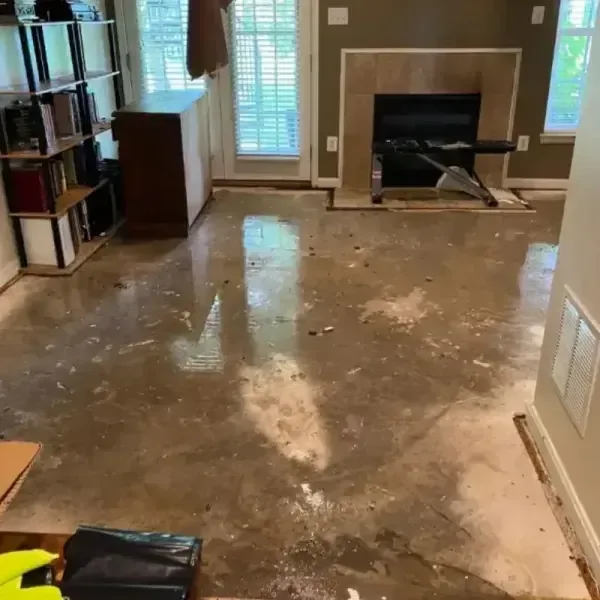
Once safe access is available, removing pooled water allows a closer look at surfaces that were submerged. The water extraction process can expose the condition of floor edges, thresholds and lower wall finishes that were difficult to evaluate while liquid covered the room.
Floor coverings and trim can conceal additional wet material after the visible water has been removed. Technicians should follow the observed path into those assemblies and explain any proposed access opening, including what the opening is intended to reveal and which finish will need replacement afterward.
Water contact and material condition drive the decisions about cleaning, retention and removal. A durable surface suitable for cleaning may remain while an affected absorbent layer requires removal, so the estimate should describe the assembly involved and the proposed treatment rather than assigning a single action to the whole room.
Cleaning comes before drying the retained structure
Outdoor water can leave soil and debris on surfaces and inside gaps. Those deposits need attention as part of cleanup, with handling arranged to keep affected materials from passing through clean living spaces unnecessarily and to leave retained surfaces ready for the drying work that follows.
Equipment placement should support the materials selected to remain. The explanation provided to the homeowner should connect each drying area with the wet assembly being treated, especially where a cabinet, partition or floor transition creates a section that behaves differently from the open center of the room.
The structural drying service follows moisture in those retained materials. Repeated readings from identified locations provide a clearer account of progress than the appearance of the room alone, and they help explain why equipment remains in a section that already looks tidy.
- Keep cleaning and disposal routes clear of unaffected possessions.
- Identify the material being measured at each location.
- Record accessible edges as well as the center of the wet room.
- Ask for the reason behind changes in equipment placement.
Entry repairs belong in the recovery conversation
A clean interior still needs a plan for the opening that admitted water. The owner should retain photographs of that location and obtain an explanation of the next repair task, whether it concerns a doorway, an exterior building detail or drainage around the affected part of the property.
Springfield participates in the NFIP, and Chapter 9 of the city zoning ordinance covers floodplain districts. For work involving floodplain questions, the city is the place to confirm how the property and proposed repair should be assessed before construction decisions are made.
The repair discussion should remain specific enough to assign responsibility. A cleanup scope can identify an observed opening and the interior work completed, while a separate repair proposal describes how the relevant building or drainage problem will be addressed and what access the contractor needs to complete that work.
Keep a closing record that remains useful later
The final file should make sense after the room has been put back together. It should connect the first observations with removal photographs, retained materials, drying readings and remaining repairs, so an owner can revisit the record without relying on memory of where equipment or wet furniture once stood.
A room name should stay consistent throughout the paperwork. If an adjoining storage area became part of the work after extraction, that addition should appear in the notes with the reason it was inspected, rather than appearing only as an unexplained extra room on a final invoice.
Before possessions return, the homeowner can ask which areas are ready for use and which still need construction or specialty assessment. Keeping those answers with the closing photographs makes the handoff practical, particularly when different trades will visit the property after the water cleanup equipment has been removed.
Questions
What should a homeowner describe before the first visit?
The most helpful description identifies the entrance available, the rooms where water was observed and whether incoming water has stopped. Details about wet electrical equipment or unstable finishes should be raised before anyone attempts interior access.
Should furniture move before the water is photographed?
Its original position is useful information when it can be documented safely. Heavy or affected items should wait for a handling decision, particularly when moving them would spread water into a clean room.
Does pumping finish the cleanup?
Pumping addresses the liquid that equipment can collect. The subsequent inspection determines which concealed layers need access, which surfaces require cleaning and which retained materials need monitored drying.
What information belongs with a proposed removal?
The proposal should identify the finish, its observed condition and the purpose of opening or removing it. Photographs taken during that work help connect the decision with the material found underneath.
Where can Springfield floodplain repair questions be directed?
The city publishes floodplain management information and its zoning ordinance covers floodplain districts. The owner can present the property details and proposed work to the city for the applicable assessment.