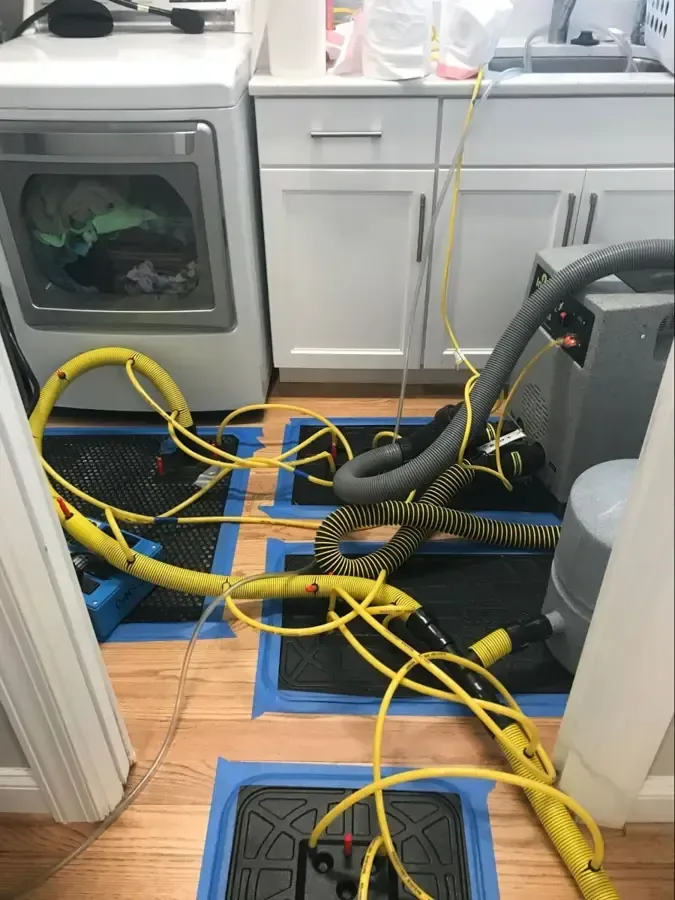
A washer puddle can disappear from the laundry room while moisture remains beneath its floor. Springfield housing listings include a brick ranch in Stonegate and new ranch construction in Autumnwood. At an affected home, the useful inspection follows the appliance connections, the installed flooring and the doorway into neighboring space, giving the owner a clear account of what became wet and what needs attention after the appliance problem is corrected.
Key takeaways
- Stop appliance use until the leaking connection or component has been assessed.
- Record when water appeared during the wash cycle and where it first collected.
- Inspect beneath accessible edges and at the laundry room threshold.
- Separate appliance repair from cleanup of the building materials it wetted.
- Use repeat material measurements before covering the affected floor again.
The wash cycle supplies useful clues
The first account of a laundry leak should describe what was happening when water appeared. An owner may have noticed a puddle while the machine filled, discharged or sat unused, and that observation gives the person inspecting the appliance a starting point without requiring another test cycle in a wet room.
Water near the front of the machine can have traveled from a less visible connection. The appliance and its supply and drain connections should be assessed before use resumes, with the homeowner avoiding attempts to move a heavy unit across wet flooring or reach electrical connections through pooled water.
The appliance leak cleanup page explains the building side of this problem. A useful service request includes the observed appliance behavior, the rooms involved and whether water is still appearing, allowing source inspection and material assessment to be organized around the same set of observations.
- Keep the machine out of use until its fault is addressed.
- Note whether water appeared during filling or draining.
- Photograph accessible connections without moving the appliance unsafely.
- Describe any water that reached a neighboring doorway.
A dry surface can conceal a wet floor edge
Laundry flooring often meets trim, fixed cabinetry or another floor finish at its perimeter. After accessible water is collected, those junctions deserve individual checks because the visible room surface and the material beneath a covering can have different moisture conditions and different access needs.
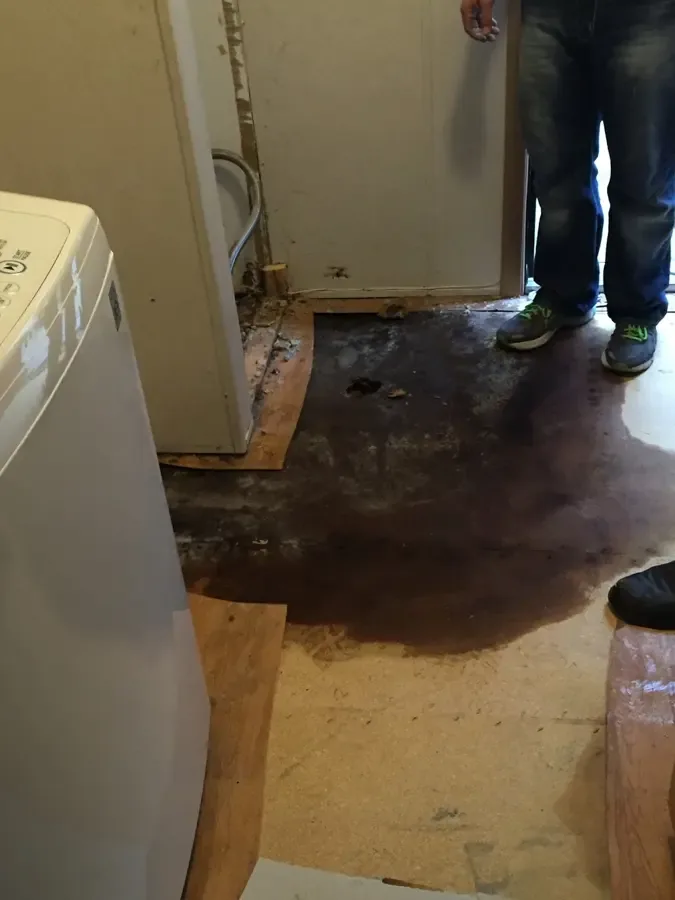
The inspector should explain which layers are present at the actual property. A floor assessment becomes much easier to follow when it distinguishes the exposed finish from the underlying material and identifies the exact edge, seam or opening used to evaluate moisture beneath the visible surface.
An owner can ask how far the inspection extended beyond the original puddle. That answer should describe adjoining thresholds and wall bases that were checked, along with any locations that remain inaccessible, so the next decision about lifting a finish or opening an edge has a clear purpose.
Cabinets and stored laundry need separate decisions
A fixed cabinet can trap the wet boundary out of sight, while baskets and cartons can obstruct the edge that needs inspection. The first task is to distinguish movable contents from installed furniture, then establish a safe route for removing the contents that prevent access to the affected perimeter.
Photographs of the cabinet base and the surrounding floor help explain what is being inspected. If access behind a removable panel is proposed, the scope should say what that access will show and identify any finish repair associated with the opening before the work proceeds.
Wet towels and fabric storage items should be assessed separately from the room structure. Putting a damp basket back into the laundry area while the floor is being monitored can complicate the work, so temporary storage should keep those items from pressing against the newly exposed building materials.
- Record the condition of cabinet bases beside the machine.
- Remove dry stored items through a suitable access route.
- Identify panels or trim proposed for temporary removal.
- Keep damp contents away from monitored floor edges.
The doorway may connect more than floor finishes
A laundry threshold is a useful place to pause and inspect both sides. Water that crosses it may affect a different finish in the hall, and the cleanup plan should describe those materials individually instead of ending the inspection automatically at the room name shown on the service request.
The water extraction service handles accessible liquid with attention to the surfaces involved. A change from a hard finish to an absorbent covering can change the removal and drying tasks, making the transition itself an important part of the room record.
Wall bases near the doorway also deserve attention when the observed path reaches them. Labeled measurements help connect the laundry room with any adjoining area that becomes part of the work, keeping the final scope understandable even after puddles, baskets and temporary equipment have disappeared from view.
Repairing the machine and drying the room are separate jobs
A repaired hose or appliance component stops the source only when the repair has been checked appropriately. The water already released still needs its own assessment, including any concealed material that remains damp after the machine is ready to return to service and the exposed floor looks clean.
The owner should know who is responsible for the appliance decision and who is tracking the building materials. Sharing the repair status with the drying provider helps avoid equipment being removed on the assumption that a working machine also means the surrounding floor assembly has finished drying.
The structural drying process monitors the materials selected for retention. Its records should identify the points being revisited and explain why the current arrangement of equipment supports those areas, especially where the machine or fixed cabinetry limits ordinary access to the room perimeter.
- Keep the appliance repair record with the cleanup file.
- Identify any inaccessible floor section before equipment removal.
- Ask which measurements support the next change in the plan.
- Confirm that the source has been corrected before normal use resumes.
Floor replacement should follow the material assessment
The decision to retain or replace flooring should account for condition, water contact and the ability to inspect and dry the assembly. An owner should receive an explanation tied to the actual finish and underlying material, with any proposed removal described by location and purpose.
A replacement discussion also needs to identify the next trade and the work area that trade will receive. The flooring installer should be able to distinguish a surface ready for the proposed installation from a section still awaiting assessment, additional drying or repair to an adjacent wall or cabinet.
Photographs of opened edges can be particularly useful at this handoff. They preserve details that will become hidden again after trim and flooring return, allowing the owner to retain a record of the layer inspected and the condition documented before the room was closed up.
Make the laundry room easy to check afterward
Once work is complete, stored items should return in a way that leaves relevant connections and floor edges accessible. A simple arrangement can make a future puddle easier to notice and reduce the need to shift a large amount of household storage before the source is examined.
The owner can retain a short description of the original symptom beside the repair paperwork. The cycle condition, the first wet location and the component addressed are useful details if a similar observation occurs later, while the drying file preserves a separate account of the building materials involved.
The final walkthrough should cover the floor transition, cabinet base and any room added to the scope. That gives the owner a practical explanation of where the work started and ended, along with a list of finish repairs or appliance followup still needed before the laundry area is fully restored.
Questions
Should the washer run again to show where it leaks?
A wet room should not be used for an informal test that may release more water. The appliance specialist can determine a suitable inspection method after considering access, electrical conditions and the reported symptom.
Why inspect the hallway after a laundry leak?
The threshold may be part of the water route, particularly where the visible puddle reached the doorway. Checking the adjoining finish helps establish whether that area needs its own cleanup or drying task.
Does a new washer connection resolve damp flooring?
Correcting the connection addresses future discharge from that fault. Material checks still determine whether the floor, lower wall or cabinet base affected by the earlier release needs further treatment.
Must every floor covering be removed?
Retention depends on what was wetted, the condition found and whether the underlying assembly can be assessed and dried. A proposed removal should come with a location specific explanation.
What should remain in the homeowner's file?
Useful records include the appliance repair description, photographs beneath opened finishes, moisture locations and the final scope. A separate list of outstanding finish work makes the handoff easier to manage.