Burst Pipe Water Damage in Nashville
Stopping the spray is only the beginning after a pipe ruptures. Water inside a partition can reach flooring and rooms below, leaving several materials wet before the leak becomes visible.
(888) 849-5796Discuss the ruptured pipe damage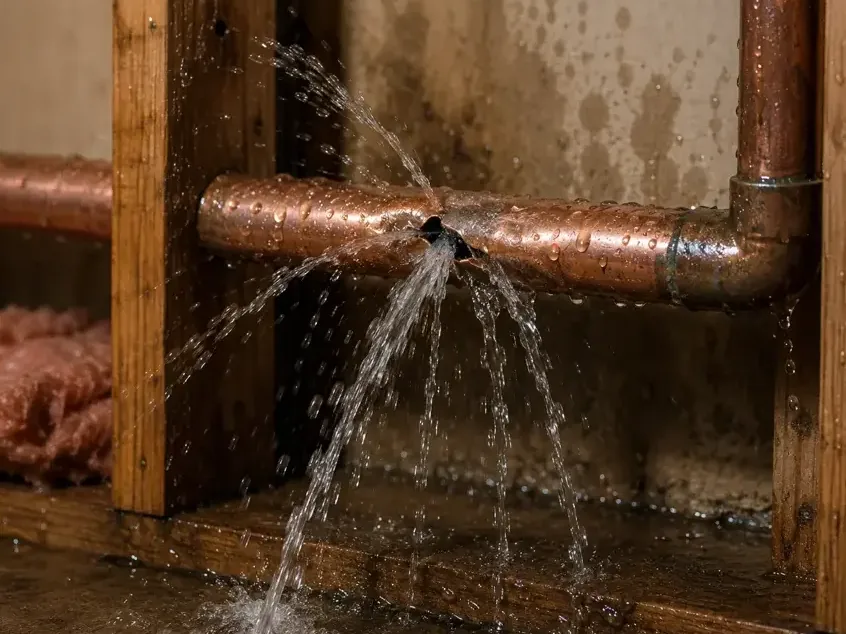
A burst supply pipe can soak a wall from the inside before water appears at its base. Nashville has generally cool winters and received substantial snow in January 2016. Seasonal conditions make pipe protection relevant, while the immediate response to any rupture remains specific: stop continuing flow safely, arrange the pipe repair and trace the water that already escaped.
The first wet room may not contain the whole loss
Water follows available openings. It can spread behind trim, cross a floor transition or descend through a ceiling assembly. The source room therefore needs inspection alongside connected areas. A dry looking face on one side of a partition does not replace checking the cavity or the materials at the opposite base.
For an Inglewood owner, useful observations include when the leak was discovered and which wall first showed water. A property in The Nations may have a different room arrangement and access problem. The inspection records the building's visible damage, pipe materials and construction, then uses moisture measurements to define the work area.
- Photographs of the initial spray or puddle should be taken only from a position with safe electrical separation.
- Rooms below the rupture need attention when water has entered a floor cavity or appeared near an overhead fixture.
- Closed closets beside the source can conceal damp flooring and should be included in the inspection when accessible.
Coordinate plumbing access with damage removal
A plumber may need an opening to repair the pipe. Cleanup can require additional access if moisture extends beyond that repair opening. The written scope should explain why each area needs to be exposed, distinguishing source work from damaged material removal. Stable, retainable materials should be assessed for drying rather than removed simply because they are nearby.
After excess liquid is extracted, insulation and damaged finishes are evaluated for their condition and drying access. Wet framing can require monitored drying even when the pipe repair is complete. Equipment should serve the mapped wet area and be adjusted as readings change, rather than remain positioned around the original puddle alone.
Close the wall only after the moisture work
Paint and replacement trim come after source control and appropriate drying of retained materials. A completion record should identify what was opened, what was removed and the condition of remaining structure. That record helps the repair stage avoid covering a wet cavity behind a newly finished surface.
The structural drying service explains how material readings support this handoff. Any fresh dampness following the pipe repair should be reported so recurring entry can be investigated before finishes are installed.
What does burst pipe water damage cost in Nashville, TN?
Burst pipe water damage costs in Nashville depend on how far the release traveled and which assemblies became wet. Plumbing repair, extraction, drying and replacement finishes should have distinct scopes in the estimate.
Contained supply release
$1,000 to $2,500
- Localized room extraction
- Limited wet finishes
- Source area assessment
Wall and ceiling spread
$2,500 to $6,500
- Connected cavity inspection
- Insulation condition assessment
- Targeted drying access
Several connected levels
$6,500 to $14,000
- Broader moisture mapping
- Multiple assembly openings
- Coordinated repair records
These are typical ranges, not a quote. Water category, affected area, material class and the delay before drying change the scope. Compare the water damage cost calculator.
How burst pipe water damage progresses
Confirm release control
The inspection records the pipe repair status and identifies any continuing flow, allowing removal work to proceed with a clear understanding of the active source.
Map connected damage
Moisture checks follow the cavity and floor route from the rupture into adjoining or lower areas, defining a practical boundary for extraction and material assessment.
Remove and dry
Excess water and unsuitable wet finishes are addressed before drying is organized around retained materials, with access selected for the actual affected layers and their condition.
Assess before reconstruction
Final observations and moisture readings are documented alongside remaining openings, giving the owner and repair trades a clear account of what still needs replacement or further attention.
Measured care for burst pipe water damage
Rapid local response
The response team treats an active loss as urgent, with 24/7 dispatch and an assessment that starts with safe access, the source and the rooms still taking water.
IICRC S500 drying standard
The drying team compares wet materials with a dry reference, sets equipment for the evaporation load and records changes until the material reaches its drying goal.
Claim-ready documentation
The mitigation crew records the initial condition before opening assemblies, then keeps moisture maps, equipment notes and daily readings together so the scope remains understandable.
Local water experts
The walkthrough follows the actual construction and entry path. The crew traces wet floors, wall stains and exterior entry paths to locate the source and map the affected materials.
Burst pipe water damage in Nashville
In Nashville, an owner in Inglewood, The Nations or North Nashville can report where the pipe failed and which rooms became wet. Access and moisture spread determine the cleanup discussion for the property.
The same service nearby: burst pipe water damage in Springfield, Cross Plains, Franklin.
Related water damage services in Nashville
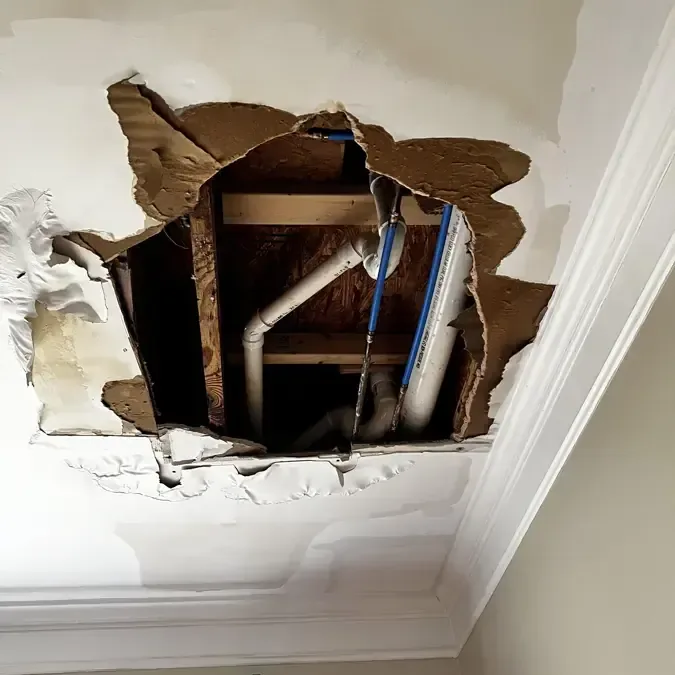
Ceiling Leak Water Damage in Nashville
Assess overhead materials before opening the cavity.
Service details
Water Extraction in Nashville
Follow standing water removal into the hidden wet areas.
Service details
Structural Drying in Nashville
Use material readings to guide equipment adjustments.
Service detailsBurst Pipe Water Damage questions in Nashville, TN
Should the main valve be closed immediately?
A known shutoff can limit damage when it is reachable without electrical exposure or unsafe entry. No one should cross standing water to reach it. If access is uncertain, keep people away from the affected space and arrange assistance with stopping the source safely.
Why is water still dripping after the pipe repair?
Water already held in a cavity can continue draining after the release stops. Continuing drips still need assessment because a second source or incomplete repair may also be involved. Report where the water appears and whether the pattern changes so the inspection can follow it.
Does a small pipe opening give enough drying access?
Not necessarily. The repair opening is selected to reach the pipe, while moisture may extend farther through the assembly. Measurements and material condition determine whether additional access is needed. Any proposed opening should have a clear purpose in the cleanup and drying plan.
Can the ceiling below the leak remain in use?
Occupancy depends on the condition of overhead materials and electrical components. Sagging, loose or actively dripping areas should remain clear until assessed. The room below may also need inspection of walls and flooring where water landed or migrated, even after the overhead source is stopped.
Will winter weather determine the cause of the rupture?
The failed pipe needs its own diagnosis. Weather conditions can be useful background for the plumbing investigation, alongside the location and observed failure. Cleanup decisions focus on the release route, material condition and moisture spread rather than selecting a cause from the season alone.
What should the owner keep after cleanup?
Keep the plumbing repair record, photographs of affected rooms, the itemized cleanup scope and moisture documentation. These records help explain how the release was addressed and what remained for reconstruction. They are also useful when discussing the loss with an insurer or comparing repair proposals.
Follow the damage beyond the plumbing opening
Mention unsafe access, overhead damage and any water that continues to appear after the pipe has been repaired.
(888) 849-5796Explain the pipe release path